ABOUT
Bruce Woolley:
The Man Behind the Music
Bruce Martin Woolley (born 11 November 1953, Loughborough, England) is an English musician whose creative life spans songwriting, producing, performance, and experimental electronics. For over five decades, he has woven together pop, new wave, and futurist sounds with a restless curiosity. (He is best known as co-writer of “Video Killed the Radio Star” and “Slave to the Rhythm.”)
His career has moved by instincts and invention — from writing songs for others, to fronting his own band, to exploring the edges of sound with theremins and space-age instrumentation.

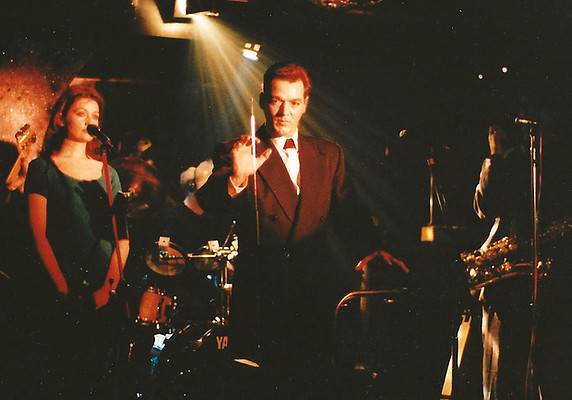
Doctor Dog - 1970
Bruce Woolley:
The Songwriter
Bruce’s heart is in songwriting. Early on, he collaborated with Trevor Horn and Geoff Downes, penning songs such as “Video Killed the Radio Star” and “Clean, Clean.”
Beyond that, his catalog includes chart and cult works for artists like Grace Jones — most notably “Slave to the Rhythm” — and contributions to pop, jazz, and electronic acts across multiple genres.
His songwriting philosophy emphasizes melody, emotional directness, and a willingness to experiment with form, texture, and narrative.

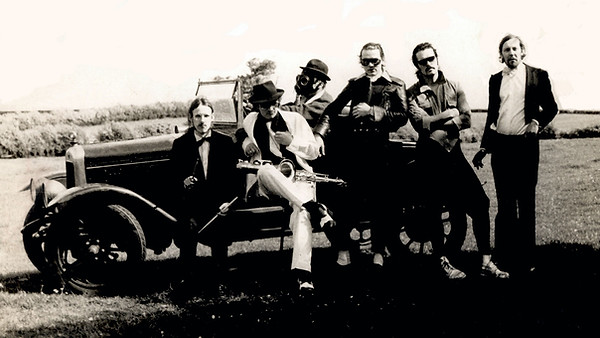
See You at the Ritz Fritz - 1974
Bruce Woolley:
The Producer
As a producer, Bruce has guided recordings with precision and adventurousness. He has worked in collaboration with leading names in the industry, operating both inside classic studio environments and within more modular, experimental setups.
His production credits include co-producing work for projects tied to Grace Jones, and contributing creative direction on albums spanning from synth-pop to avant-electronic forms.
In the studio, Bruce blends vintage instrumentation with contemporary techniques — always with an ear for clarity, mood, and sonic depth.

Geoff, Tina, Bruce & Trevor - Bangkok 1978
Bruce Woolley:
The Camera Club
In 1979, Bruce founded The Camera Club, a band rooted in new wave, power pop, and punk energy, with early members such as Thomas Dolby, Matthew Seligman, Dave Birch, and Rod Johnson.
The band released their core album English Garden (1979), toured the UK and the U.S., and produced unreleased material whose vaults have since become highly prized by fans.
Bruce and The Camera Club also recorded their own interpretation of “Video Killed the Radio Star” before the Buggles’ version became ubiquitous.
Today, The Camera Club’s legacy is revitalized by archival releases, live revivals, and new material inspired by that same spirit.

Camera Club Backstage - New York
Bruce Woolley:
The Radio Science Orchestra
Bruce is one of the central figures in The Radio Science Orchestra (RSO), an ensemble committed to weaving retro-futuristic soundscapes, electronic textures, and theremin-centered performance.
RSO has performed in planetariums, music festivals, science museums, and unique spaces, often merging visual storytelling with sonic explorations.
The ensemble frequently draws inspiration from astronomy, vintage electronics, and narrative themes — using the theremin, modular synths, and ambient elements to evoke cosmic moods.
Bruce remains an active vocalist, composer, and theremin player within RSO, creating immersive performances that bridge art, science, and pop.

Tina Charles
Bruce Woolley:
Film Projects
Bruce’s creative reach extends into film, television, and visual media. He has credits in The Avengers (1998) and Lawrence: After Arabia (2021), among others.
His music has also been licensed in major films and soundtracks, such as The Wedding Singer and Empire Records, where “Video Killed the Radio Star” gained renewed attention decades after its release.
Through sync, scoring, and composition, Bruce engages with film directors, editors, and creatives to bring layered, emotionally resonant music into visual storytelling.